
How Much Does a Website for a Security Company Cost in South Africa? (2026)
If you run a security company in South Africa (guarding, armed response, alarm and CCTV installation, or a mix of all three) and you want to know what a website should cost, this guide gives you the 2026 numbers. It also covers what a security company’s website has to prove that most small business websites never think about.
We build and manage websites for security companies, alarm installers and other service businesses across South Africa, so the prices and advice below come from real projects.
The short answer
A website for a security company in South Africa costs between R250 per month and R40,000 once-off in 2026.
| Option | Typical 2026 price | Suited to |
|---|---|---|
| DIY website builder | R0 – R500/month | A one-person alarm or CCTV installer starting out |
| Freelancer or template build | R3,500 – R9,000 once-off | A small guarding or installation business |
| Design agency | R15,000 – R40,000 once-off | Regional companies with control rooms, several branches and a client portal |
| All-inclusive monthly plan | R250 – R850/month | Most small and medium security businesses |
Put that next to what a client is worth. One armed response subscriber pays roughly R400 to R900 a month, and one guarding contract for a complex or business park can be worth R20,000 to R100,000 a month. A website at R250 a month costs R3,000 a year. A single new estate contract pays for it many years over.
Why a security company’s website is different
A homeowner looking for a plumber wants someone today. A homeowner, a body corporate or a facilities manager looking for a security company is asking something bigger: can I trust these people with my family, my staff and my keys?
That makes the website a vetting tool. Before anyone phones you, they want to check:
- That you are legal. Your PSIRA registration and that your officers are registered and graded.
- That you actually cover their area. Armed response is local. A company 40 minutes away is no use at 2am.
- That you respond. Your control room, your response vehicles and how quickly you get there.
- Who else trusts you. Estates, schools, businesses and complexes you already protect.
Most security company websites skip all four and show a stock photo of a man in sunglasses. That is the gap a good website fills.
What each price level buys
DIY builders – R0 to R500 a month
Wix, Squarespace or a free builder will put a page online. For a security business the risk is credibility: a template site with a free domain and a Gmail address looks like exactly the kind of fly-by-night operator that clients are trying to avoid. Expect 20 to 40 hours of your own time.
Freelancer or template build – R3,500 to R9,000 once-off
A proper site on your own domain in one or two weeks. Before you pay, ask:
- Is the domain registered in your company’s name?
- Are hosting, SSL and email included after the first year?
- Who adds a new area, a new branch or a new client logo, and what does it cost?
- Will the site have a separate page for each service and each area you cover?
- Who sets up your Google Business Profile?
Design agency – R15,000 to R40,000 once-off
Worth considering for a regional company with several branches, a client portal for incident reports or patrol logs, online sign-up with debit orders and recruitment forms for officers. Budget a further R1,000 to R3,000 a month for hosting, security updates and support.
All-inclusive monthly plan – R250 to R850 a month
Design, hosting, SSL, a professional email address and monthly updates bundled together, with no setup fee. For most small and medium security companies this is the sensible choice: a professional site without a large upfront cost, kept secure and up to date by someone else. Plans at the higher end, such as our Growth Pack, also manage your Google Business Profile and reviews, which matters because “armed response near me” is answered on Google Maps before anyone clicks a website.
The pages a security company’s website actually needs
A page for each service
People search for the specific thing they need, not for “security solutions”. Give each service its own page:
- Armed response and alarm monitoring
- Guarding for estates, complexes and businesses
- Alarm system installation and repairs
- CCTV installation and off-site monitoring
- Electric fencing and access control
- Event security and VIP protection
- Patrols and neighbourhood watch support
Each one is a separate search and a separate way to be found. A one-page website can only realistically rank for one of them.
A page for each area you cover
Armed response is sold suburb by suburb. A page for each area you genuinely cover, with your response coverage, the nearest base and the estates you already patrol there, lets you show up for “armed response Ballito” or “security company Midrand” instead of competing for the whole country. Only create pages for areas you actually serve. Google, and your clients, can tell the difference.
Your PSIRA registration, clearly displayed
Show your PSIRA business registration number where it is easy to find, and explain that your officers are registered and graded. This is the single biggest trust signal on a security website, and PSIRA’s code of conduct expects security businesses to show their registration on business communications. Check the current PSIRA requirements and keep any claims factual.
Proof that you respond
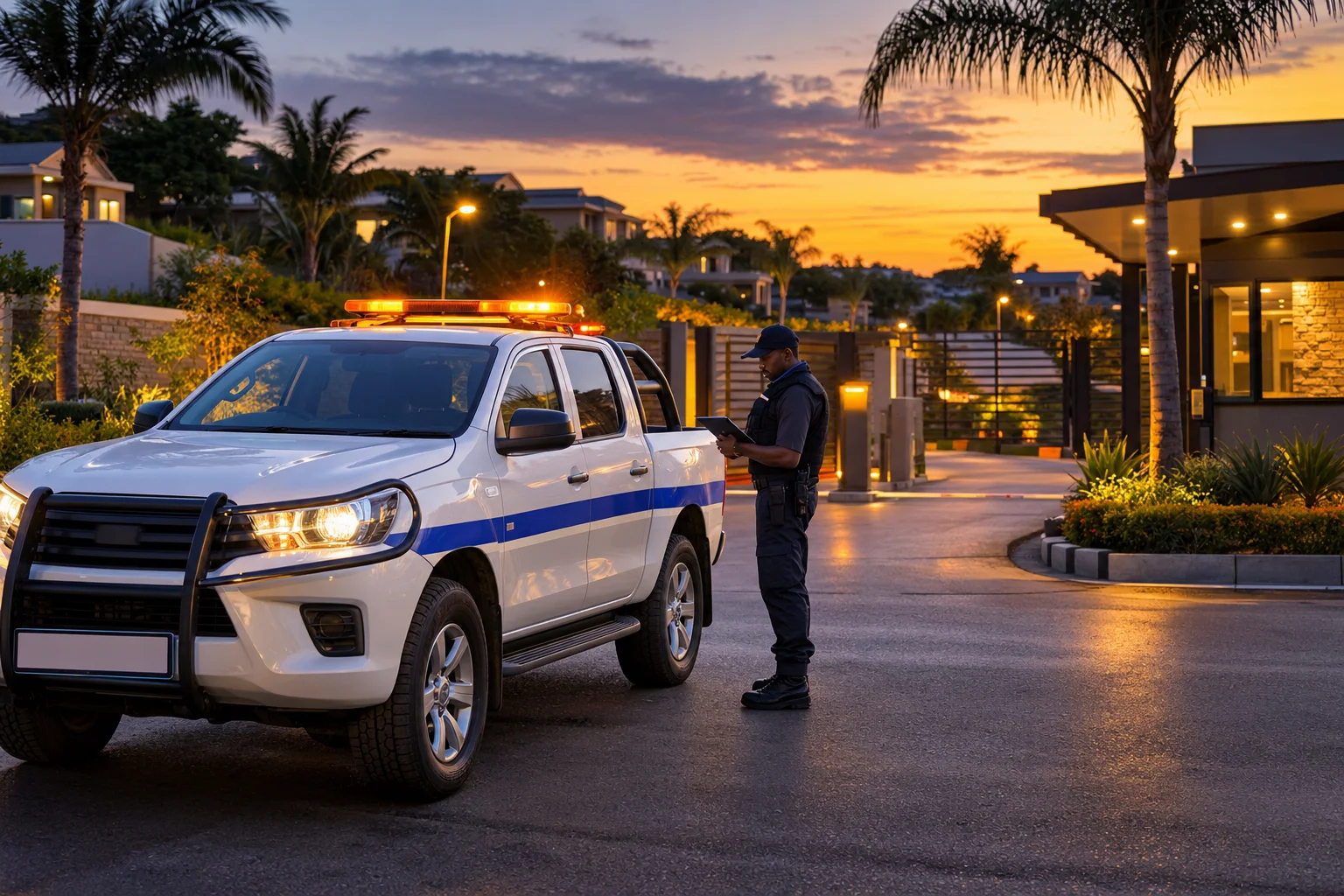
Photos of your actual control room and response vehicles, your average response times if you track them, and how alarms are handled from signal to dispatch. Never publish anything that would help a criminal, such as patrol schedules, vehicle numbers or gaps in coverage. Show capability, not operational detail.
Who you already protect
Client logos (with permission), short testimonials from estate managers or business owners, and case studies such as “how we reduced incidents at a 120-unit complex”. For contract guarding, this page often decides the shortlist.
A tender and quotation page
Body corporates, schools and businesses often need a formal quote for their trustees or procurement process. A page that explains how you quote, what a site assessment involves and which documents you can provide (PSIRA certificates, letters of good standing, B-BBEE certificate, insurance) saves you a lot of back-and-forth and makes you look ready for bigger contracts.
A careers page
Security companies are always hiring. A careers page that lists the PSIRA grades you need and how to apply keeps CVs out of your sales inbox. Do not ask applicants to upload ID copies through an ordinary website form. Collect those securely when you interview.
A simple way to sign up or ask for a quote
A WhatsApp button, a phone number that dials in one tap, and a short form that asks only for the area, property type and service needed. A separate, clearly marked emergency number for existing clients prevents panicked callers from landing in your sales line.
How security companies actually get found online
Google Business Profile comes first
When someone searches “armed response near me” or “security company Pinetown”, Google shows three businesses on a map before any websites. Choose the right category (for example Security service, or Security system supplier for installers), set your real service area, list every service and add photos of your vehicles, team and control room. Our Google Business Profile setup guide walks through it step by step.
Reviews from real clients
Ask satisfied homeowners and managing agents for a Google review. A review that says “they were at our gate within six minutes” does more selling than anything you can write. Do not offer discounts or gifts for reviews: Google’s rules forbid it.
Estates, managing agents and community groups
One managing agent can control security decisions for dozens of complexes. Community Facebook groups and neighbourhood watches discuss security companies constantly. A professional website gives all of them something to share, which is far easier than passing on a phone number.
Common mistakes on security company websites
- No PSIRA number anywhere. Careful buyers assume you have something to hide.
- Stock photos only. Clients want to see your real officers, vehicles and control room.
- “We cover all of Gauteng.” Nobody believes it, and it ranks for nothing. Be specific about your areas.
- One long services page. Armed response, guarding and CCTV are different buyers with different questions.
- Too much operational detail. Never publish patrol routes, schedules or anything that helps someone plan around you.
- A contact form that nobody checks. In security, a slow reply to an enquiry says everything about your response times.
So which option should you choose?
For a small or medium security company, an all-inclusive monthly plan is usually the best value: a professional site with a page for every service and area, your PSIRA details front and centre, hosting, email and updates included, for less than one guard’s shift each month. Larger regional companies that need client portals and online debit order sign-ups should budget for an agency build and a monthly support contract.
At The Webster, websites start at R250 a month with no setup fee, and the Growth Pack adds full Google Business Profile management with our Top 3 in 90 days guarantee. See what we build on our web design for security companies page, or get in touch for a free look at your current site and Google profile.
Not a security company? See what a website costs for electricians, construction companies, cleaning companies and accountants, or read our guide to website design packages and prices.
Frequently asked questions
How much does a website for a security company cost in South Africa?
Between R250 a month for an all-inclusive plan and R40,000 once-off for an agency-built site with a client portal. Most small and medium security companies spend R250 to R850 a month, or R3,500 to R9,000 once-off plus hosting.
Should I show my PSIRA number on my website?
Yes. It is the first thing careful clients and managing agents look for, and PSIRA expects security businesses to display their registration on business communications. Put it in the footer and on your About page.
Do security companies need a website if most work comes from tenders and referrals?
Yes. Trustees, procurement teams and referred clients all look you up before they shortlist you. A professional website with your registration, client list and service areas is often what gets you onto the shortlist in the first place.
What should a security company website include?
A page for each service and each area you cover, your PSIRA registration, real photos of your team, vehicles and control room, client testimonials, a quotation page, a careers page, a WhatsApp button and a tap-to-call number.
Can clients sign up for armed response online?
They can. A simple site can take sign-up enquiries through a short form, and a larger build can handle full online sign-ups with debit order mandates. Collect ID numbers and bank details only through a secure system, never through an ordinary contact form.
How long does it take to build a security company website?
Around five to seven days for a standard site once your services, areas, registration details and photos are supplied.
Do I own the website if I pay monthly?
Your domain should always be registered in your company’s name. Confirm it in writing with any web designer before you sign.