
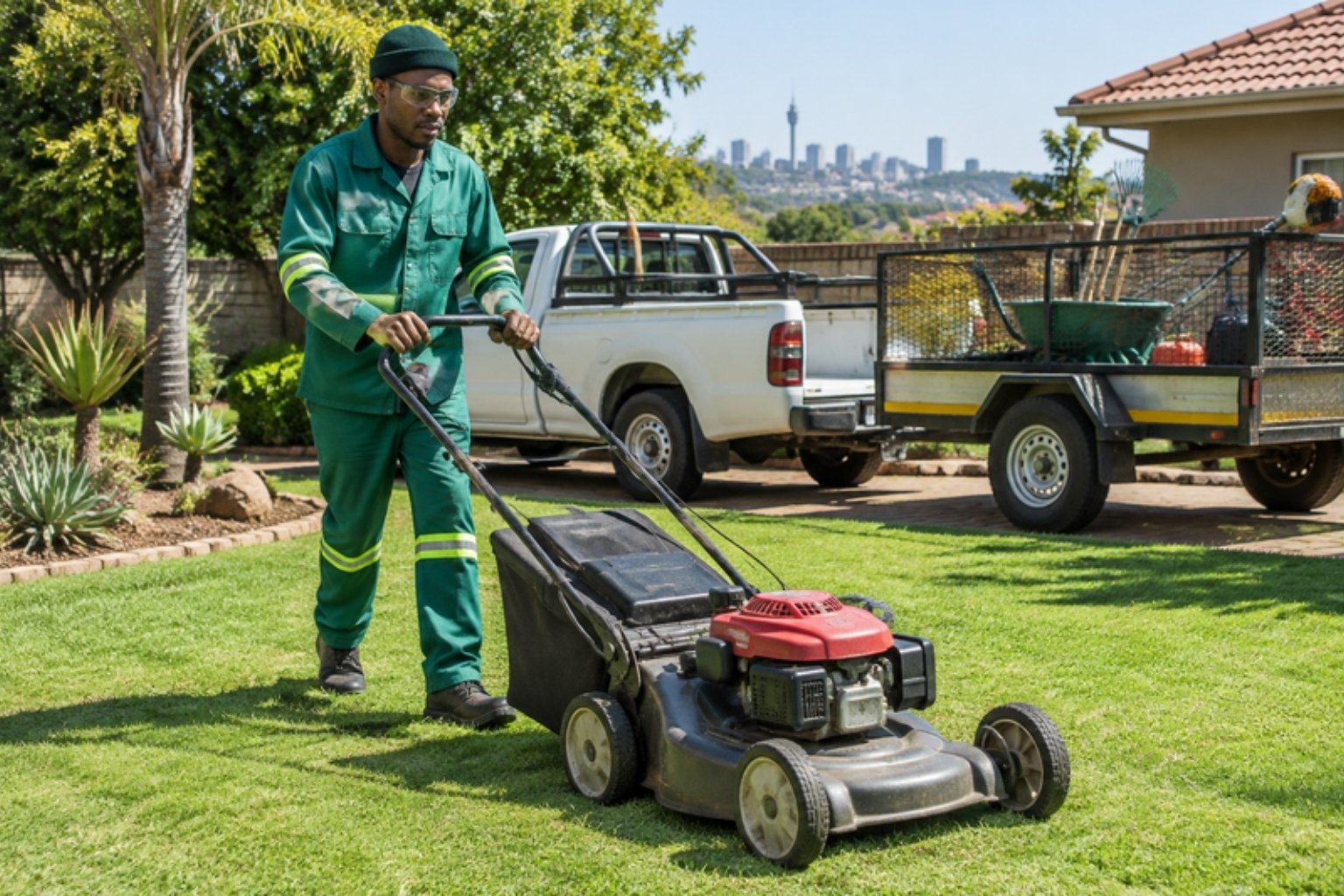
How to Start a Garden Service Business in South Africa (2026 Guide)
A garden service is one of the most practical businesses to start in South Africa. Lawns grow, hedges spread and leaves fall every week, so homeowners, complexes and businesses need someone they can rely on, week after week. That regular, repeat work is what makes a garden service a solid business rather than a string of once-off jobs.
This guide explains how to start a garden service business in South Africa in 2026: what you need legally, what it costs to get going, the equipment to buy, how to price your work and how to find your first customers.
The short answer: what do you need?
- Gardening skills, and PCO registration under Act 36 if you will spray weedkillers or pesticides for customers.
- A registered business with CIPC and SARS, plus UIF and COIDA once you employ anyone.
- A lawnmower, brushcutter, hand tools and a way to move equipment and garden refuse, usually a bakkie or a trailer.
- Public liability insurance.
- A way for customers to find you: a Google Business Profile, reviews and a simple website.
| Starting as | Typical startup cost | What it covers |
|---|---|---|
| Solo with own vehicle | R15,000 – R40,000 | Registration, lawnmower, brushcutter, blower, hand tools, safety gear, insurance, basic marketing |
| Owner plus small team | R50,000 – R120,000 | Trailer, second set of machines, wages buffer, branded vehicle or trailer |
| Small landscaping company | R150,000+ | Second vehicle, ride-on mower or larger machines, bigger team, compliance for complex and commercial contracts |
The biggest variable is transport. If you already own a bakkie or a car that can tow a trailer, you can start for far less.
Step 1: Decide what services you will offer
Most garden services start with the basics and add higher-value work over time:
- Lawn mowing and edging, the core of most weekly and fortnightly contracts
- Hedge and shrub trimming, and keeping beds weeded and tidy
- Garden refuse removal, which customers value and will pay for
- Once-off clean-ups for overgrown properties, moving tenants and houses going on sale
- Planting, irrigation and small landscaping projects, which pay better per hour
Tree felling and work on large trees is a separate, higher-risk trade. Refer it to a specialist unless you have the training and equipment.
If you spray weeds or pests
Spraying herbicides or pesticides on other people’s property for payment requires registration as a Pest Control Operator under Act 36 of 1947, in the weeds or garden pest category. You need to complete an accredited training course and apply to the Registrar at the Department of Agriculture. Until you are registered, stick to mechanical weed control or refer spraying to a registered operator.
Step 2: Register the business
Sole proprietor or company?
You can start as a sole proprietor under your own name. Complexes, body corporates and commercial clients often prefer a registered company, so many garden services register a (Pty) Ltd once they start quoting for that work.
CIPC and SARS
Registering a private company through the CIPC’s online BizPortal costs around R175 including name reservation, and the company is registered for income tax with SARS automatically. VAT registration is compulsory once turnover passes R1 million in a 12-month period (check SARS for the current threshold), and you can register voluntarily from R50,000.
If you employ staff
- Register for UIF and PAYE with SARS.
- Register with the Compensation Fund (COIDA). Mowers, brushcutters and hedge trimmers cause injuries, and complexes will ask for your letter of good standing.
- Pay at least the national minimum wage, and give every worker a written agreement.
Step 3: Buy the right equipment
Buy reliable machines, because a broken mower on a Monday means missed jobs all week:
- A petrol lawnmower built for daily commercial use
- A brushcutter for edges, long grass and banks
- A hedge trimmer and a leaf blower
- Hand tools: rakes, spades, forks, secateurs, loppers and wheelbarrow
- Safety gear: eye and ear protection, gloves, safety boots and visors for brushcutting
- Refuse bags or a trailer to take garden waste away
Keep spare blades, line and a basic service kit with you, and service machines regularly. Downtime costs you more than maintenance.
Garden refuse
Find out where you can dispose of garden waste in your municipality and what it costs. Many municipalities have garden refuse sites, but rules and fees for businesses differ. Build disposal into your prices.
Step 4: Get insurance
Public liability insurance covers you if a stone from a brushcutter breaks a window or damages a car, which happens more often than new garden services expect. Complexes and commercial clients will usually ask for proof of cover before you start, so arrange it early.
Step 5: Price your work properly
Garden services make money from regular work, so structure your prices around it:
- Weekly, fortnightly or monthly contracts for homes, priced by garden size and what each visit includes
- Complex and commercial contracts, priced by the area and the number of visits a month
- Once-off clean-ups, quoted per job after you see the property
- Extras such as refuse removal, planting and irrigation repairs, charged separately
Build every price from your real costs: fuel, travel, wages, machine wear, refuse disposal and your margin. Group clients by area so your team spends more time working and less time driving.
Monthly contracts
A list of clients on monthly contracts is the most valuable thing a garden service owns. It gives you predictable income, lets you plan staff and makes the business worth something if you ever sell it. Offer a small discount for contracts paid by debit order.
Step 6: Get your first customers
Set up your Google Business Profile
Customers search “garden service near me” when they are ready to hire. A complete Google Business Profile with before-and-after photos, service areas and reviews puts you on the map for those searches. Our Google Business Profile setup guide walks you through it.
Win one street at a time
Once you service one garden in a street, the neighbours see your work. Leave a neat flyer with your WhatsApp number in the post boxes nearby, and offer a discount to neighbours who sign up for a monthly contract. Clients close together are also cheaper to service.
Approach complexes, body corporates and businesses
Townhouse complexes, office parks, schools and churches all need regular garden maintenance. One complex contract can be worth as much as a dozen homes, and it gives your team a full day of work in one place.
Get a simple website
A website with your services, areas, before-and-after photos and an easy way to request a quote gives Google something to show for every search. See how we build websites for garden services, and what a garden service website costs in South Africa.
Common mistakes to avoid
- Spraying without PCO registration. Applying herbicides for payment without it is illegal.
- Pricing too low to win work. Fuel, wages and machine wear add up quickly.
- Clients spread across the city. Travel time eats your profit, so build clients by area.
- No public liability insurance. One broken window or damaged car can cost more than a month’s work.
- Only doing once-off jobs. Monthly contracts are what make the business stable.
- Being hard to find online. If you are not on Google, customers call the garden service that is.
Frequently asked questions
How much does it cost to start a garden service business in South Africa?
Roughly R15,000 to R40,000 if you already have a vehicle, covering registration, a commercial lawnmower, brushcutter, blower, hand tools, safety gear, insurance and basic marketing. A trailer, a team or larger machines push it higher.
Do I need a licence to start a garden service in South Africa?
You do not need a licence for mowing, trimming and general garden maintenance. If you spray herbicides or pesticides for payment, you must be registered as a Pest Control Operator under Act 36 of 1947.
How do garden services charge in South Africa?
Most charge a monthly fee for regular visits, priced by garden size and what each visit includes, and quote separately for once-off clean-ups, refuse removal, planting and irrigation work.
Is a garden service business profitable in South Africa?
It can be, because startup costs are low and the work repeats every week. Profit depends on pricing that covers fuel, wages and equipment, keeping clients close together, and building a base of monthly contracts.
How do I get my first garden service customers?
Set up a Google Business Profile with before-and-after photos, ask every customer for a review, target the neighbours of your existing clients, approach complexes and businesses, and get a simple website that makes it easy to request a quote.
Final thoughts
Starting a garden service in South Africa is mostly about three things: reliable equipment, prices that cover the real cost of every visit, and a growing list of monthly contracts close to each other. Get those right and the business grows steadily, because every garden keeps growing.
When you are ready to be found online, The Webster builds websites for garden services from R250 a month with no setup fee, and our Growth Pack gets your business into Google’s Top 3 on Maps in 90 days, or your next month is free. Get in touch to talk it through.