
How to Start a Pest Control Business in South Africa (2026 Guide)
Pest control is a business that never runs out of work in South Africa. Cockroaches, rats, termites, bedbugs and ants turn up in homes, restaurants, schools and warehouses all year round, and many businesses are legally required to keep pests under control. That steady, repeat demand makes pest control one of the more reliable service businesses to start.
This guide explains how to start a pest control business in South Africa in 2026: the Act 36 registration you need before you can treat a single property, what it costs to get going, the equipment to buy, how to price your work and how to win your first customers.
The short answer: what do you need?
- Registration as a Pest Control Operator (PCO) under Act 36 of 1947, in the categories of work you plan to do.
- A registered business with CIPC and SARS, plus UIF and COIDA once you employ anyone.
- Spraying equipment, protective gear, registered products and a vehicle.
- Public liability insurance.
- A way for customers to find you: a Google Business Profile, reviews and a simple website.
| Starting as | Typical startup cost | What it covers |
|---|---|---|
| Solo operator with own bakkie | R25,000 – R70,000 | PCO training and registration, sprayers, protective gear, first chemical stock, insurance, basic marketing |
| Operator plus assistant | R70,000 – R150,000 | Second set of equipment, wages buffer, branded vehicle, bait stations for contract clients |
| Small pest control company | R180,000+ | Second vehicle, fogging and termite equipment, larger team, compliance for commercial contracts |
The biggest variables are whether you already own a suitable vehicle and which categories of work you take on. Termite and fumigation work needs more training and more expensive equipment than general household pest control.
Step 1: Get trained and registered as a PCO
Why registration matters
In South Africa, anyone who applies pesticides for payment must be registered as a Pest Control Operator under the Fertilizers, Farm Feeds, Agricultural Remedies and Stock Remedies Act (Act 36 of 1947). Registration is handled by the Registrar of Act 36 at the national Department of Agriculture. Operating without it is an offence, and serious clients will ask to see your registration certificate before they sign anything.
Training
To register, you complete a training course for each category of work with an accredited training provider and pass the assessment. Categories cover areas such as household and structural pests, wood-destroying organisms like termites and borer, fumigation, and weeds and garden pests. Most new operators start with household and structural pests, then add termites once they have experience.
Applying and renewing
Once you have passed, you apply to the Registrar with your training certificates, ID and the application fee. Registration has to be renewed periodically, so diarise the expiry date. Requirements and fees change from time to time, so check the current process with the Department of Agriculture before you apply.
Industry membership
Joining the South African Pest Control Association (SAPCA) is not compulsory, but it gives you access to training, technical updates and a membership logo that helps when you quote for restaurants, schools and corporate sites.
Step 2: Register the business
Sole proprietor or company?
You can start as a sole proprietor under your own name. Restaurants, property managers and corporate clients often prefer a registered company, so many pest control operators register a (Pty) Ltd early.
CIPC and SARS
Registering a private company through the CIPC’s online BizPortal costs around R175 including name reservation, and the company is registered for income tax with SARS automatically. VAT registration is compulsory once turnover passes R1 million in a 12-month period (check SARS for the current threshold), and you can register voluntarily from R50,000.
If you employ staff
- Register for UIF and PAYE with SARS.
- Register with the Compensation Fund (COIDA). Commercial clients will ask for your letter of good standing.
- Make sure every technician who applies pesticides is trained and registered, or works under the supervision your registration allows.
Step 3: Buy the right equipment
You do not need everything on day one. Start with what household and small business work needs:
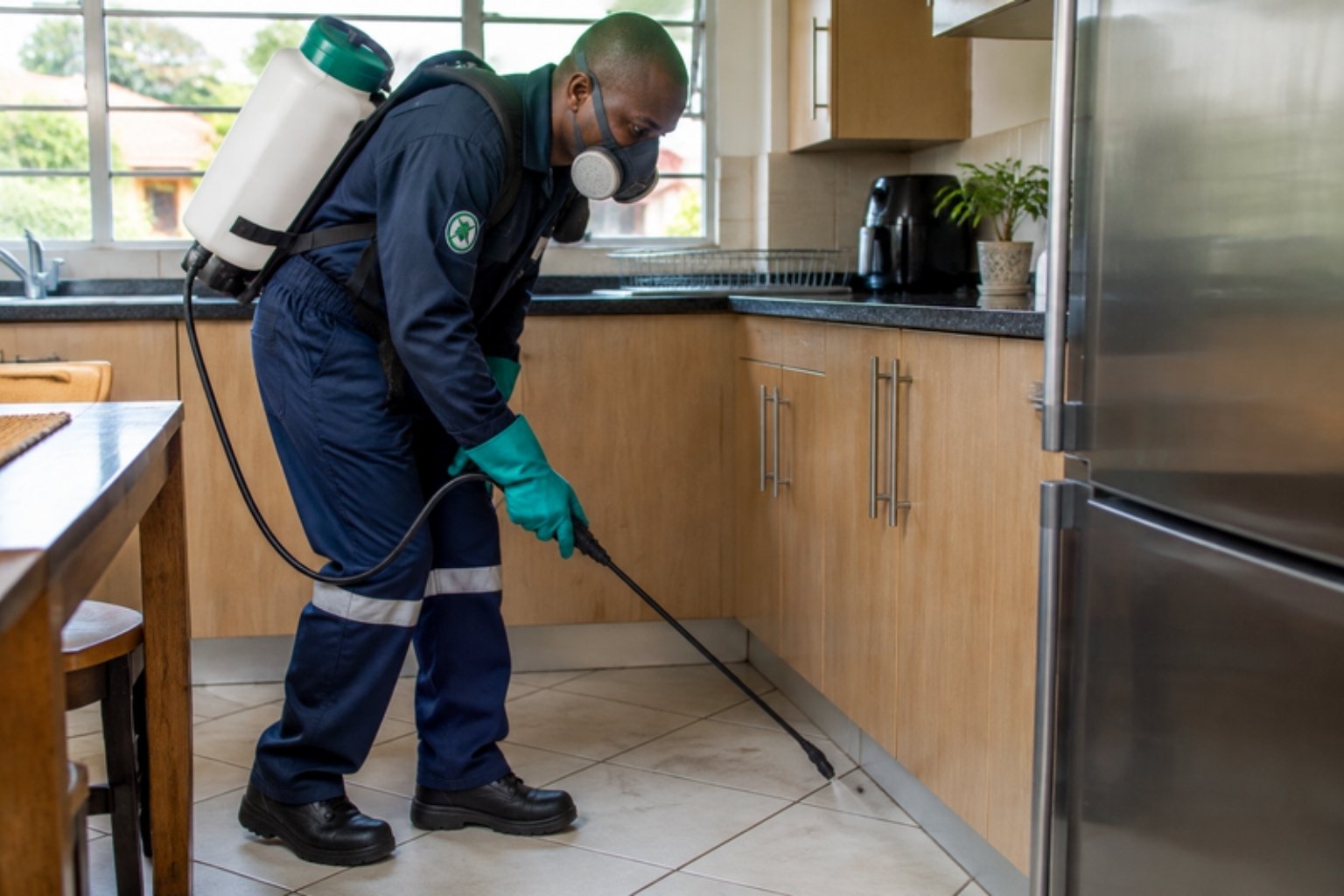
- Pressure sprayers, including a quality backpack sprayer and a smaller hand sprayer for detail work
- A bait gun and dusters for cockroach gel and crack-and-crevice treatment
- Rodent bait stations and traps, which become a monthly income stream on contracts
- Protective gear: respirator with the right cartridges, gloves, goggles and overalls
- Registered products for the pests you treat, bought from a reputable supplier with safety data sheets
- A lockable chemical box for your vehicle and a spill kit
Add a fogger, termite injection equipment or fumigation gear only when you are registered for that category and have the work to justify it.
Step 4: Handle chemicals safely
Safety is what separates a professional from someone with a spray bottle. Use only products registered under Act 36, follow the label exactly, keep safety data sheets in the vehicle and explain to every customer how long to keep children and pets away from treated areas. Store chemicals locked and away from food, and never decant them into unmarked containers. Getting this right protects your customers, your staff and your registration.
Step 5: Get insurance
Public liability insurance covers you if a treatment damages property or a customer claims they were harmed. Many commercial clients will not sign a contract without proof of cover. Ask your broker about cover that specifically includes pesticide application, because general policies sometimes exclude it.
Step 6: Price your work properly
Pest control has two kinds of income, and a healthy business needs both:
- Once-off treatments for homes, such as a cockroach or ant treatment, priced by property size and pest
- Monthly or quarterly contracts for restaurants, shops, schools, body corporates and warehouses, which give you predictable income
Build every price from your real costs: chemicals, travel, time on site, equipment wear and the follow-up visit. Offer a guarantee period on treatments, because customers who know you will come back if pests return are more willing to book.
Contract work
Food businesses need documented pest control to pass health inspections and audits. Keep a service record for every visit, with bait station maps, products used and findings. Clients value good paperwork as much as the treatment, and it makes your contracts hard to replace.
Step 7: Get your first customers
Set up your Google Business Profile
Most people search “pest control near me” the moment they see a rat or a cockroach. A complete Google Business Profile with your service areas, photos and reviews puts you on the map for those searches. Our Google Business Profile setup guide walks you through it.
Ask every customer for a review
Reviews are the deciding factor in pest control, because people are letting you spray chemicals in their home. Ask every happy customer for a Google review and send the link by WhatsApp straight after the job.
Approach restaurants, body corporates and rental agents
Walk into restaurants, takeaways and food shops in your area with a simple contract offer. Body corporates and rental agents need pest control between tenants and for common areas. One good contract can carry your quiet months.
Get a simple website
A website with a page for each pest you treat, your PCO registration, service areas and guarantee gives Google something to show for every search. See how we build websites for pest control companies, and our full guide on how to get more pest control customers.
Common mistakes to avoid
- Operating before you are registered. It is illegal, and one complaint can end the business before it starts.
- Using unregistered or decanted products. They are unsafe, and they put your registration at risk.
- No public liability insurance. One damage claim can wipe out a year’s profit.
- Only doing once-off jobs. Contracts are what make a pest control business stable.
- Poor records. Commercial clients need service reports for their audits.
- Being hard to find online. If you are not on Google, the customer with the rat problem calls someone who is.
Frequently asked questions
How much does it cost to start a pest control business in South Africa?
Roughly R25,000 to R70,000 for a solo operator who already owns a vehicle, covering training and registration, sprayers, protective gear, first chemical stock, insurance and basic marketing. Adding staff, termite work or fumigation pushes it higher.
Do I need a licence to do pest control in South Africa?
Yes. Anyone who applies pesticides for payment must be registered as a Pest Control Operator under Act 36 of 1947, in the categories of work they do. Registration is handled by the Department of Agriculture.
How long does it take to become a registered pest control operator?
The training course for a category usually takes days to a few weeks, depending on the provider and category. After you pass, allow time for the Registrar to process your application before you start working.
Is pest control a profitable business in South Africa?
It can be, mainly because of repeat work. Monthly contracts with restaurants, shops and body corporates give steady income, while once-off home treatments fill the gaps. Profit depends on pricing that covers chemicals, travel and follow-up visits.
How do I get my first pest control customers?
Set up a Google Business Profile, ask every customer for a review, approach restaurants and body corporates in your area with a contract offer, and get a simple website that lists your services, areas and registration.
Final thoughts
Starting a pest control business in South Africa comes down to three things: proper PCO registration, contracts that give you repeat income, and being easy to find when someone spots a rat in the kitchen. Get those right and the business grows steadily, because pests never stop coming back.
When you are ready to be found online, The Webster builds websites for pest control companies from R250 a month with no setup fee, and our Growth Pack gets your business into Google’s Top 3 on Maps in 90 days, or your next month is free. Get in touch to talk it through.